When reading the book “Boatbuilding with Plywood” and then referring to the instructions listed in my plans and bill of materials for recommendations for type of wood to use for the frames in the first phase of construction, I came across three different options. The first recommendation for framing material was “White Oak”, the second “Philippine Mahogany”, and the third “Sitka Spruce”. Along with these three, many who are building or have already built the boat I am crafting have used “African Mahogany”, “Honduras Mahogany”. Below I graded each according to characteristics and research I’ve done.
Plans Recommended:
1. White Oak: A domestic hardwood that is easiest and cheapest to obtain in bulk FAS grades for boat building. It is very common in lumber yards (15% of all US sales), and you most likely will have your pick of the top boards. Naturally decay, rot and water resistant with very good overall strength.
- Cost: *****
- Availability: ****
- Workability: ***
- Strength: ****
- Attractiveness: ***
- Adhesive Characteristics: ***
- Modulus of Rupture: 15,200 lbf/in2
- Crushing Strength: 7,440 lbf/in2
Pros:
- Rot, Decay, Water Resistant
- Cost efficient and very good availability
- Excellent strength
Cons:
- Somewhat difficult to work, may dull tools
- Adhesives may have difficulty sticking because of very low absorption and natural oil properties of the wood. Need to make sure the epoxy or glue used can be used with White Oak or lumber with higher oil properties.
2. Philippine Mahogany (Red Meranti, Lauan): On the cheaper end of the mahogany spectrum, but with good overall availability. Not a true mahogany but has characteristics and properties similar to mahogany. Decay, rot and water resistance is very good. Fairly easy to work with and with good strength. Properties of the wood allow for good bonding to surfaces.
- Cost: ****
- Availability: ***
- Workability: ****
- Strength: ***
- Attractiveness: ****
- Adhesive Characteristics: ****
- Modulus of Rupture: 11,800 lbf/in2
- Crushing Strength: 6,840 lbf/in2
Pros:
- Rot, Decay, Water Resistant
- Cost efficient mahogany and with better availability than mahogany
- Good strength
- Good adhesive properties
- Easy to work with
Cons:
- Somewhat more expensive
- May have difficulty planing due to interlocking nature of the grain
- Susceptible to insect attack
- Lower durability than White Oak, Sitka Spruce, and true Mahogany
3. Sitka Spruce:
Other:
4. African Mahogany (Khaya): Moderately priced with moderate level of availability. Decay, rot and water resistance is very good. Very easy to work with and with very good adhesive properties and strength. Wood exhibits natural light-reflecting phenomena known as chatoyancy.
- Cost: ***
- Availability: ***
- Workability: ****
- Strength: ***
- Attractiveness: *****
- Adhesive Characteristics: ****
- Modulus of Rupture: 12,240 lbf/in2
- Crushing Strength: 8,100 lbf/in2
Pros:
- Rot, Decay, Water Resistant
- Very good strength
- Very good adhesive properties
- Easy to work with and finish
Cons:
- High cost per bf
- More expensive with less availability depending on location
- Susceptible to insect attack
5. Honduran Mahogany: Difficult to acquire hardwood due to international restrictions. As a true mahogany, it has better overall decay, rot and water resistance compared ot Lauan and Khaya. Very easy to work with and with very good adhesive properties and good strength. Wood exhibits natural light-reflecting phenomena known as chatoyancy.
- Cost: **
- Availability: **
- Workability: ****
- Strength: ***
- Attractiveness: *****
- Adhesive Characteristics: ****
- Modulus of Rupture: 11,660 lbf/in2
- Crushing Strength: 6,550 lbf/in2
Pros:
- Very good Rot, Decay, and Water Resistance
- Very good strength
- Very good adhesive properties
- Easy to work with and finish
Cons:
- Very high cost per bf
- Much less availability than the other recommended hardwoods
- Susceptible to insect attack
——————————————————–
For me, it came down to either
Oak or Mahogany? Sitka spruce never became an option because of it’s price point and characteristics.
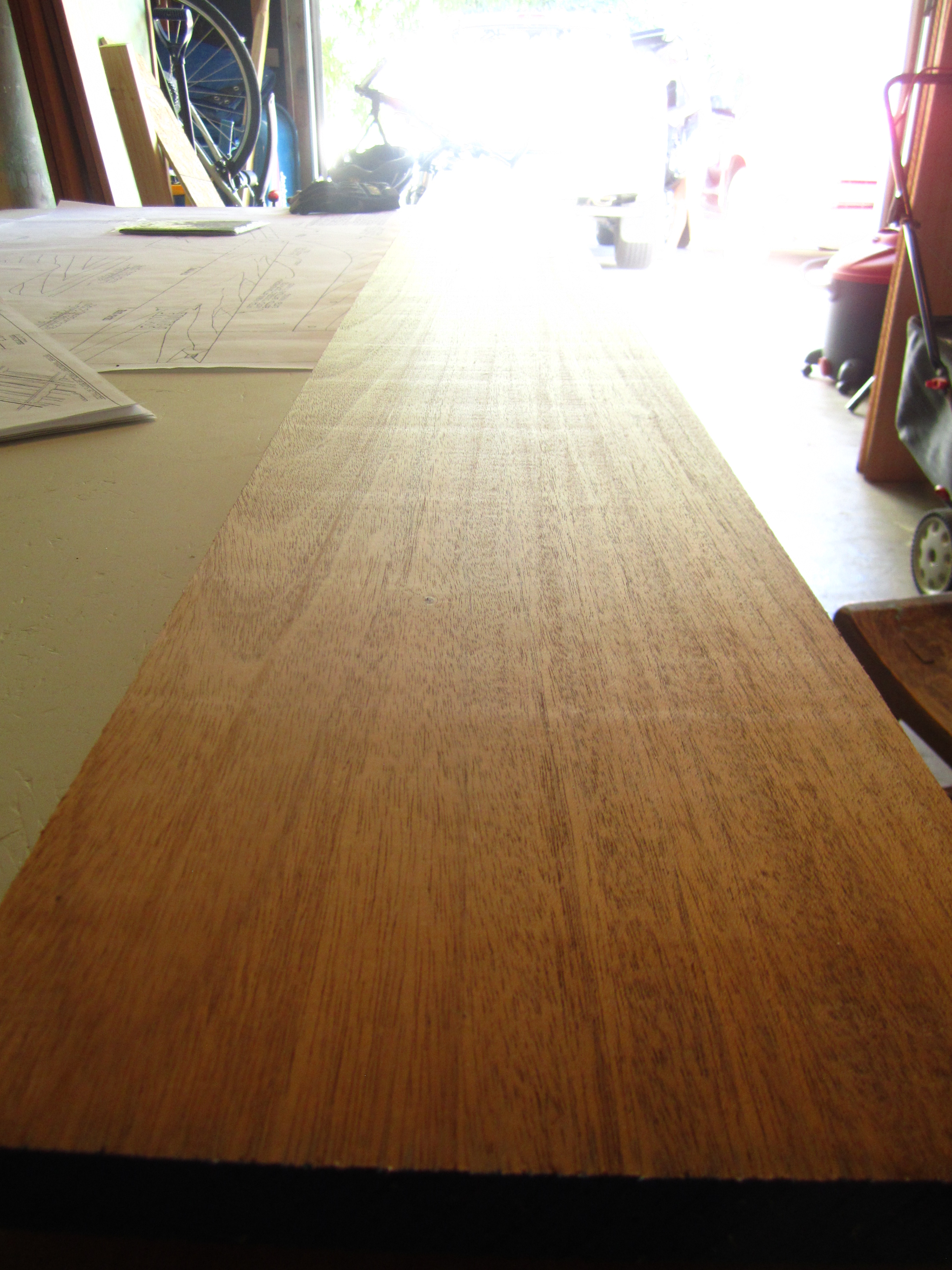
In the end, I chose African Mahogany. Honduran Mahogany is not readily available in my location and looking at the physical properties, African Mahogany had very similar properties and with slightly better crushing and overall strength. African Mahogany also had better workability than White Oak, without the propensity to dull tools and the weight associated with it. One of the deciding factors for me was the woods ability to accept adhesives in order to create a very structurally sound bond. In order to bond surfaces of White Oak, you have to scuff the surface in order for the wood to absorb the adhesive. This is further complicated by the fact that White Oak has more natural oil properties than Mahogany, which also prevents solid bond forming. The glue or epoxy used for White Oak must be specifically selected for adhesion and bonding properties for this type of wood. Rather than worry about my frame joints and gussets failing, I decided to use a type of wood that is easier to work with and that has better overall adhesive properties. African Mahogany, though more expensive is a sound wood for my purposes.
 Pure Journeys